
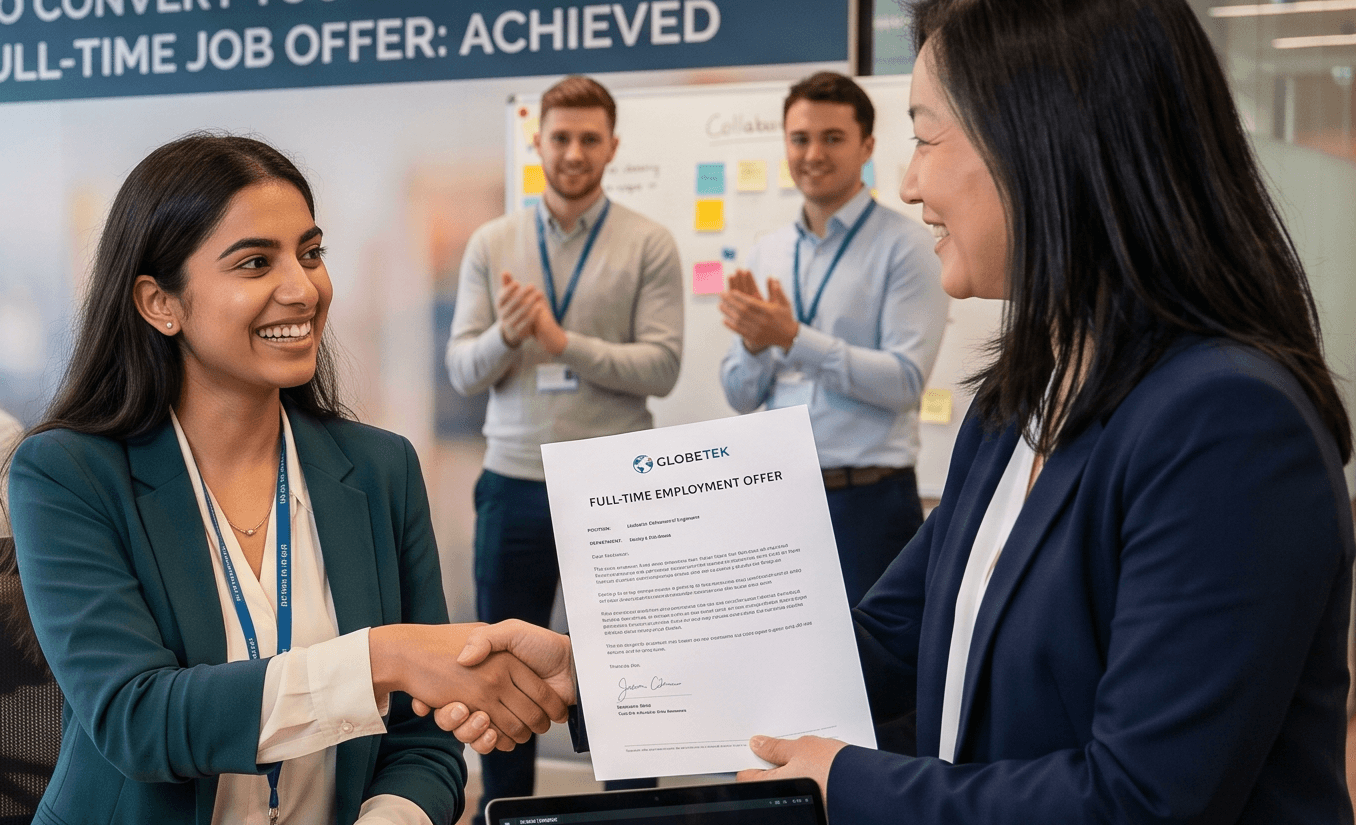
A Pre-Placement Offer (PPO) is a full-time job offer a company gives an intern before campus placements even begin, based purely on internship performance. It’s increasingly becoming the main hiring route at large companies — internships now function less like a trial and more like an extended interview. This guide breaks down exactly what recruiters and managers are evaluating during that window, and what you should be doing from day one to walk out with an offer instead of just a certificate.
Why Internships Have Become the Main Hiring Route
Employers increasingly prefer hiring people they’ve already seen perform over untested resumes and interview answers. Multiple B-school placement cells and industry trackers report a growing share of full-time hires now coming through PPOs rather than fresh campus drives, and in-office interns are generally reported to convert to full-time offers at meaningfully higher rates than remote or hybrid interns — reinforcing that visibility and in-person relationship-building still count.
For you as a candidate, this changes the goal of an internship. It’s no longer just about a certificate and a resume line — it’s an extended audition, and every week of it is being quietly evaluated.
Before Day One: Set Yourself Up to Convert
- Research the company’s products, recent news, and — most importantly — its stated values and work culture. Referencing this naturally in your first week signals genuine interest, not just presence.
- If you know your manager or team in advance, connect on LinkedIn and ask what you should read up on before starting.
- Set a personal goal beyond just ‘finish the assigned project’ — decide what skill or tool you specifically want to be visibly better at by the end.
During the Internship: What Actually Gets You Noticed
1. Treat yourself as a full-time employee from day one
Don’t mentally categorise your work as ‘intern-level.’ Take ownership of your deliverables the way a permanent employee would — this shift in mindset is consistently the single most repeated piece of advice from people who successfully converted their internships.
2. Get clarity fast, and ask questions early
If you’re unclear about your project scope within the first day or two, ask your manager directly rather than guessing. Confusion that persists into week two costs you visible progress — and progress is what gets evaluated.
3. Make your work about business impact, not just tasks
There’s a real difference between reporting ‘I wrote the script’ and reporting ‘I automated a process that saved the team several hours a week.’ Reframe your daily updates and any final presentation around outcomes and impact, not just what you technically did.
4. Build real relationships, not just visibility
- Connect with your teammates on LinkedIn early, not on your last day.
- Ask a few senior team members for short, informal chats about their career path — this builds goodwill and often surfaces useful context about what the team values.
- Participate actively in daily stand-ups or team syncs — consistent, honest updates build trust faster than occasional impressive ones.
5. Use AI tools visibly and well
In 2026, using AI tools like GitHub Copilot or ChatGPT to work faster and more accurately is increasingly expected, not optional. Demonstrating that you can use these tools to genuinely multiply your output — while still understanding what you’re producing — is one of the clearer differentiators recruiters are now looking for in interns.
6. Ask for feedback before the internship ends, not after
Request a short 5–10 minute conversation with the people you worked with closely and ask specifically what you could improve. This does two things: it gives you time to actually act on the feedback before final evaluation, and it signals maturity that stands out on its own.
7. Nail your final presentation
Most structured internship programs end with a presentation to a manager or panel. Treat this as your closing pitch, not a formality: use clean, data-driven slides, lead with outcomes and impact rather than a list of tasks, and rehearse it enough that you’re not reading off the slide.
Common Mistakes That Cost Interns Their PPO
| Avoid these • Treating the internship like a college assignment with a deadline, rather than real, accountable work. • Staying quiet when confused instead of asking — silence reads as disengagement, not competence. • Ignoring feedback loops or repeating the same mistake after being corrected once. • Underestimating people skills — a technically strong intern with poor team relationships is a much harder sell for a PPO than a solid all-rounder. • Letting PPO anxiety show in your daily work — stress that turns into visible desperation or overcorrection often does more harm than the uncertainty itself. |
If You Get the PPO: What to Clarify Before Accepting
- CTC structure — understand the split between base pay, variable/performance bonus, and any joining or retention bonus.
- Role and team alignment — if you have a preference for a specific track or specialisation, this is the point to raise it, before you’re locked into a placement.
- Joining date and any bond or notice period clauses — read these carefully rather than assuming they’re standard.
- Get the offer in writing before informing your college placement cell that you’re opting out of campus placements.
If You Don’t Get the PPO
A missed PPO isn’t a dead end — treat it as data, not a verdict. Ask directly (and politely) for specific feedback on why, since most managers will give an honest answer if asked constructively. Keep a written record of your projects and outcomes from the internship regardless of the result; it becomes strong resume and interview material either way, and many companies reopen hiring rounds later in the year that aren’t limited to their own past interns.
READ NOTE
Capgemini Hiring Process 2026 for Freshers – Eligibility, Assessment, Interview & Salary Guide
GCC Jobs in India 2026 for Freshers — Complete Guide (Salary, Top Companies & How to Get Hired)
Top 50 International Companies Hiring Remote Jobs in 2026 for India & APAC Region Read Now
Top 10 IT Companies Hiring Freshers in India 2026 — Salary, Process, Eligibility & Complete Guide
How to Write a Cover Letter for IT Jobs in India 2026 — With Templates
Salary After MBA in India 2026 — Top Companies, Roles & How Much You Really Earn