
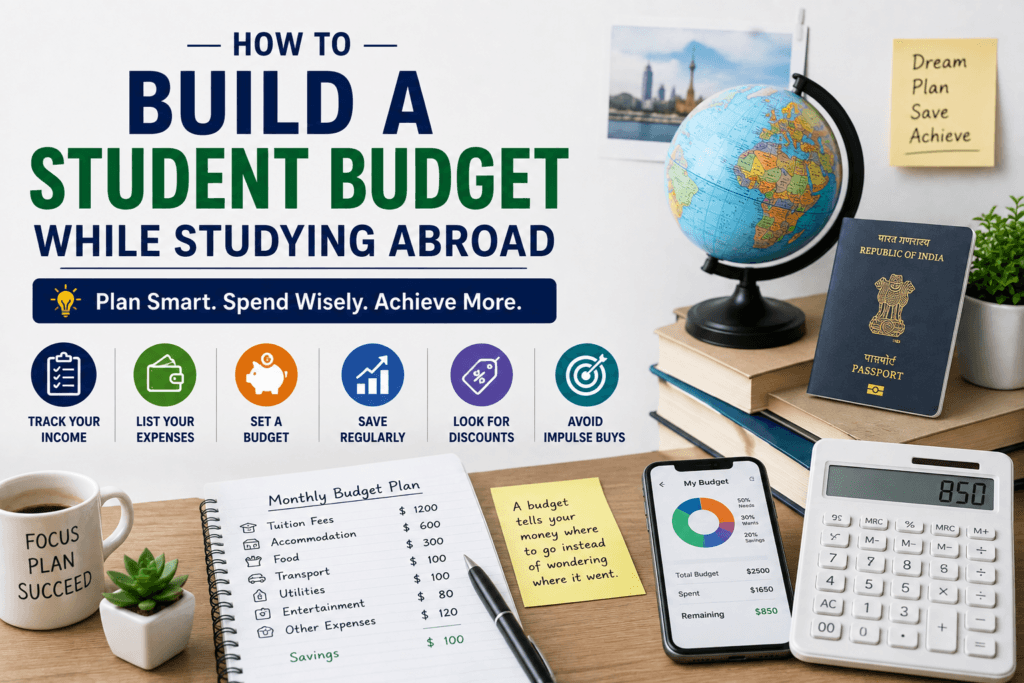
How To Build A Student Budget While Studying Abroad
Learning how to build a student budget while studying abroad is one of the most important preparation steps before leaving India. A budget is not just a list of rent and food. It should show what you must pay, what can change, what you can reduce and how much money you need before your first income or scholarship payment arrives. A realistic budget also protects you from using expensive credit for routine expenses.
Start With the Annual Cost
Begin with the university’s official cost estimate, then create your own numbers. Separate fixed costs such as tuition and insurance from variable costs such as food, transport and entertainment. Add one-time costs including visa fees, flights, deposits, winter clothing, bedding, kitchen items and initial accommodation. These first-month expenses can be much higher than a normal monthly budget.
How to Build a Student Budget While Studying Abroad: Monthly Plan
Use five categories: housing, food, transport, study costs and personal spending. Add savings or emergency funds as a separate category. If rent is 40% or more of your available monthly budget, look for shared accommodation, university housing or a lower-cost neighbourhood before cutting essential food and health expenses. A budget should protect the essentials first.
Housing
Rent is often the biggest variable expense. Compare university residences, shared apartments, private rooms and homestays. Ask what utilities are included and whether you must pay a deposit. Check commuting time as well as rent: a cheaper room far from campus may become expensive when transport costs and travel time are added. Never transfer a large deposit to an unverified landlord or agent.
Food and Daily Spending
Cooking regularly is usually easier on a student budget than eating out every day. Plan a weekly grocery list, learn the prices of basic foods in your city and keep a small allowance for eating out so the budget feels sustainable. Track small purchases because coffee, snacks, delivery fees and convenience spending can quietly become a large monthly amount.
Transport
Choose the cheapest reliable transport option. University passes, monthly transit cards, bicycles and walking can reduce costs. When comparing housing, include the transport cost in the total monthly housing decision. If you travel home during breaks, create a separate travel fund rather than taking the money from your normal monthly living allowance.
Tuition and Academic Costs
Do not treat tuition as a monthly living expense. Keep a separate education account or savings plan for semester fees, books, laboratory charges, software, exam fees and other academic expenses. If your tuition is paid in instalments, put the due dates into a calendar and save a fixed amount each month toward the next payment.
Emergency Fund
Try to maintain a cash buffer for medical costs, lost luggage, urgent travel, a broken laptop or a temporary delay in income. The exact amount depends on the country and your circumstances, but the principle is universal: do not plan a zero-balance budget. If you receive a scholarship or part-time income, consider putting a portion directly into your emergency reserve.
Part-Time Work and Budgeting
If your visa permits student work, treat income as variable. Do not build your budget around the maximum hours you are legally allowed to work. Your study workload, exam periods and job availability can change. Use work income for flexible expenses and savings rather than essential tuition commitments whenever possible.
A Simple Monthly Formula
A useful starting structure is: essential housing and utilities first, food second, transport and study costs next, then personal spending and savings. Review the budget every month. If groceries are consistently above plan, change the shopping strategy; if transport is high, compare passes; if entertainment is too expensive, set a weekly limit. Budgeting works through small corrections rather than one perfect spreadsheet.
Final Advice
Knowing how to build a student budget while studying abroad helps you make better choices before financial stress appears. Start with annual costs, convert them into monthly targets, maintain an emergency reserve and review your spending regularly. For more international education and student planning resources, visit WisdomLand and confirm local cost and visa information through your university and government sources.
Related WisdomLand Resource
For more international education, scholarship and student-career resources, visit WisdomLand.
Official Sources to Verify Current Rules
Germany – Make it in Germany: Study Visa / Post-Graduation Options