
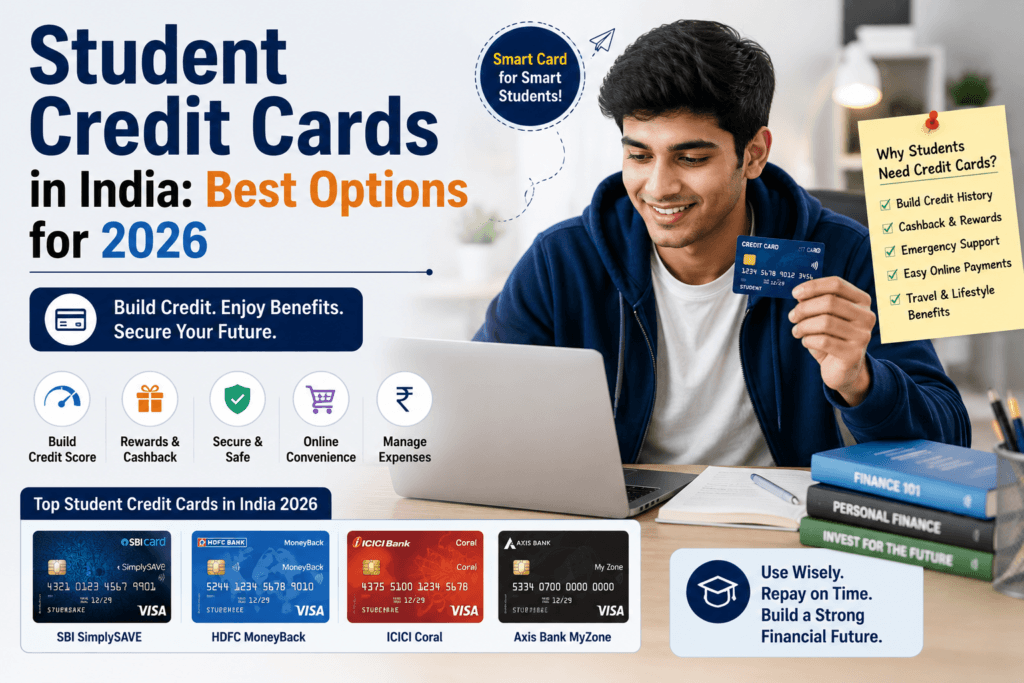
Getting your first credit card as a student is no longer limited to those with a part-time job or parental income proof. Banks have expanded their secured (FD-backed) offerings, making student credit cards in India accessible to almost anyone who can place a small fixed deposit. Beyond convenience, these cards teach responsible credit usage, improve CIBIL scores, and unlock better loan terms in the future for education or personal needs.
Top Student-Friendly Cards
IDFC FIRST WOW! (and Variants)
One of the strongest options available today. This FD-backed card is lifetime free in many variants, offers zero forex markup on international spends, and works with UPI in select versions. The credit limit is directly linked to the fixed deposit amount (usually 80–90% of the FD). It is ideal for students who may later study or travel abroad because international transactions cost nothing extra in forex charges. Many users also appreciate the easy online application and quick approval process.
Other FD-Backed Options
Several public and private banks now offer secured credit cards against a fixed deposit starting from as low as ₹5,000–₹20,000. These remain the most reliable route for students with no income or credit history. When comparing, look for:
- Low or zero annual fees
- Useful reward categories (online shopping, education-related spends, or fuel)
- Easy conversion of FD into higher credit limits later
- Transparent interest rates if you ever carry a balance
Popular alternatives include cards from SBI, Axis Bank, HDFC, and smaller private banks that have simplified their student or “first credit card” programmes.
Unsecured Starter Cards
A few banks still issue basic unsecured cards to students when a parent acts as co-applicant or when the student has an existing relationship (savings account, education loan, etc.). Benefits and rewards vary widely. Always check joining fees, annual fees, and any hidden charges before applying. Unsecured cards can offer higher initial limits but usually require more documentation and have stricter eligibility.
How to Choose the Right Student Credit Card in India
Follow these practical steps to pick the best fit:
- Start with an FD-backed card if you have no income proof or credit history. This is the safest and most accessible entry point.
- Prefer zero forex markup if you expect any international spends (online purchases from foreign sites, future travel, or studying abroad).
- Compare annual fees and reward rates carefully. A lifetime-free card with modest rewards often beats a high-fee card with flashy points.
- Check credit limit flexibility — some banks allow you to increase the limit by adding more FD later.
- Read the fine print on interest rates, late payment fees, and cash advance charges.
How to Use Student Credit Cards Responsibly
Owning a credit card is only beneficial when used wisely:
- Pay the full outstanding amount by the due date every month to avoid interest (which can exceed 3% per month).
- Keep credit utilisation below 30% of the available limit — this strongly improves your credit score.
- Set up auto-pay or calendar reminders so you never miss a payment.
- Avoid cash withdrawals, as they attract high fees and interest from day one.
- Track spends through the bank’s app so you stay within budget.
Building a clean repayment record for 12–18 months can later help you upgrade to a better unsecured card or qualify for education loans at preferential rates.
Additional Tips for Students in 2026
- Link the card to UPI where available for seamless payments at local merchants.
- Use the card for recurring education-related expenses (online courses, books, software subscriptions) to maximise rewards.
- Monitor your CIBIL or other credit reports free once a year to ensure the card is reporting correctly.
- If you plan to study abroad, an FD-backed zero-forex card can double as a useful travel companion until you open a foreign account.
For more personal finance tips related to education and student life, visit https://wisdomland.in/ Always verify the latest offers, fees, and eligibility criteria directly on the official bank websites (for example, the IDFC FIRST Bank credit cards page) before applying, as features can change.
Final Thoughts
The best student credit cards in India for 2026 focus on accessibility, low or zero fees, and features that support both domestic daily use and future international needs. An FD-backed zero-forex card such as the IDFC FIRST WOW remains one of the smartest starting points for most beginners. By choosing carefully and using the card responsibly, students can build a strong credit foundation while avoiding the common pitfalls of high interest and unnecessary debt. Start small, stay disciplined, and let your first credit card work for you rather than against you.