
Why You Need to Know How to Build a Student Budget While Studying Abroad
Many students arrive with only a rough idea of living costs. The first few weeks often bring surprises—deposits, initial grocery stock-ups, bedding, a local SIM, and transport passes. Without a structured approach, these expenses can eat into the money meant for the rest of the semester. Building a proper budget early gives you control and prevents mid-semester shortfalls.
Step 1: Estimate Your True Monthly Costs
Start by listing every major expense category. Do this before you leave or within the first week of arrival:
- Accommodation: Rent plus utilities. Shared flats or university dorms are usually the most affordable option.
- Food: Groceries and limited eating out.
- Transport: Student travel passes or local public transport.
- Phone and internet: Local SIM or eSIM plans.
- Academic costs: Books, printing, software, or lab fees not covered by the university.
- Personal and social spending: A modest monthly allowance.
- Emergency buffer: Keep a small separate reserve for unexpected needs.
Research average costs for your specific city and university. Official university cost-of-living guides and recent student forums are good starting points. Convert everything into both local currency and Indian rupees so the numbers feel real.
Step 2: Set Realistic Percentage Targets
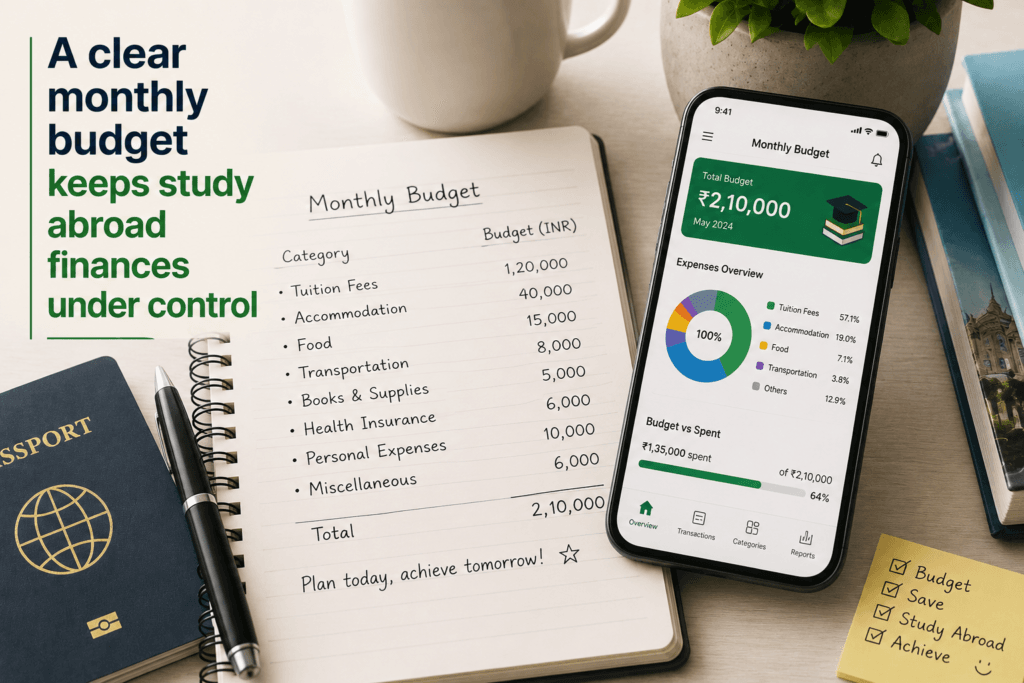
A practical way to structure your plan is to allocate roughly 40% or less to housing, 15–20% to food, under 10% to transport, and the remaining amount to academic needs, personal spending, and a small savings buffer. These percentages are only a starting point. In expensive cities, housing may take a larger share, so you will need to cook more at home and choose shared accommodation to balance the budget.
Write down your target numbers and review them every month. Adjust as you learn the actual local prices. The goal is a plan you can actually follow, not an ideal that looks good on paper but fails in practice.
Step 3: Use Practical Money Tools
Once you know your numbers, set up the right tools:
- Open a local student bank account soon after arrival. This reduces foreign transaction fees on everyday spending.
- Use a multi-currency forex card and load money in stages rather than transferring a large sum at once.
- Track every expense with a simple free app or a shared spreadsheet. Consistency matters more than complicated features.
- When family sends money from India, compare remittance services such as Wise and similar platforms for better exchange rates and lower fees.
These steps form the practical backbone of how to build a student budget while studying abroad and keep fees from quietly draining your funds.
Step 4: Cut Costs Without Cutting Quality of Life
Smart savings do not mean living poorly. Focus on high-impact habits:
- Cook at home using staples from Asian or Indian grocery stores where available.
- Share accommodation and split utilities with roommates.
- Buy second-hand textbooks or rely on the university library and digital resources.
- Always ask about student discounts for transport, museums, software, and entertainment.
- Limit eating out and takeaways to special occasions.
These choices free up money for genuine needs and occasional treats without constant restriction.
Step 5: Plan Part-Time Income Carefully
Most student visas restrict weekly working hours. On-campus jobs are often the most flexible and easiest to balance with classes. Treat any part-time earnings as a top-up for living costs, not the main source of funding. Aim for a sustainable number of hours that protects your grades and mental health.
First-Month Reality Check
The first month is almost always the most expensive. Deposits, initial groceries, bedding, a local transport pass, and a SIM card add up quickly. Budget two to three times a normal monthly amount for settlement costs and keep that money separate before you travel. Once the initial setup is complete, your regular monthly budget becomes much easier to manage.
Putting It All Together
Knowing how to build a student budget while studying abroad is a practical skill that protects both your finances and your academic focus. Begin with honest cost estimates, set clear percentage targets, use the right banking and tracking tools, control discretionary spending, and treat part-time work as supplementary income. Review your plan every month and adjust as local prices and your own habits become clearer.
Small, consistent habits—tracking expenses, cooking most meals, and reviewing numbers regularly—add up over a full academic year. Start early, stay realistic, and you will reduce financial stress and give yourself the best chance to make the most of your time abroad.