

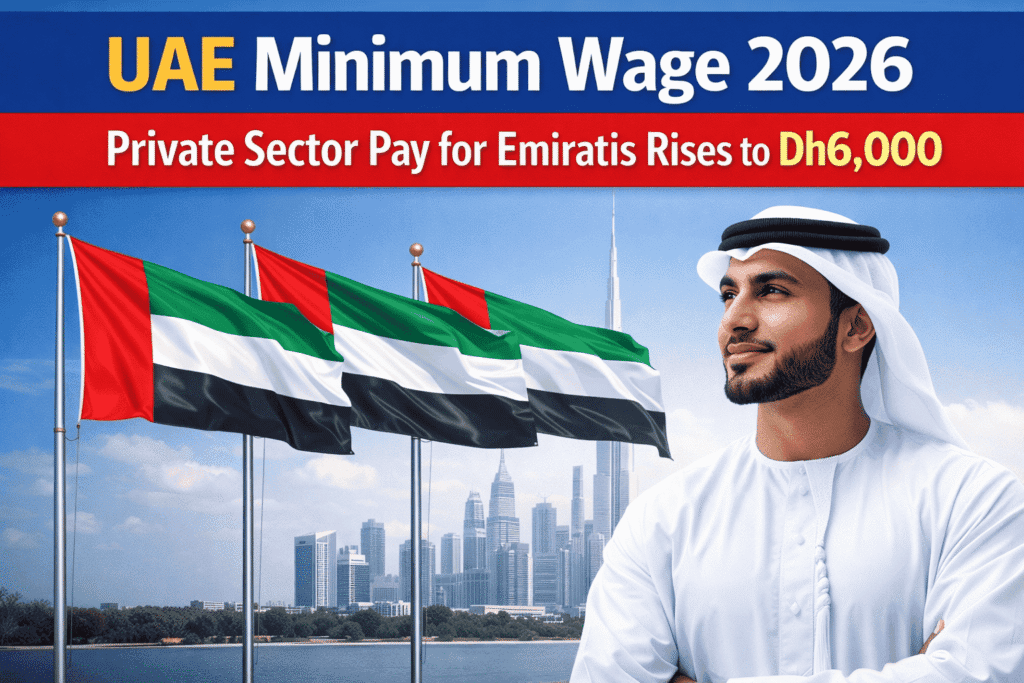
Effective January 1, 2026, the United Arab Emirates has officially implemented a new salary floor for its national workforce. The UAE minimum private sector wage for Emirati citizens has been raised to Dh6,000 per month, marking a significant milestone in the country’s ongoing Emiratisation strategy.
This move, announced by the Ministry of Human Resources and Emiratisation (MoHRE), is designed to enhance job stability for nationals and align private sector compensation with current market conditions. Whether you are an employer managing a business in Dubai or an Emirati professional looking for your next career move, understanding these changes is critical for compliance and career planning.
Key Details of the Dh6,000 Minimum Wage Update
The transition to a Dh6,000 minimum wage is the third phase of a gradual increase. The strategy initially set a floor of Dh4,000, which moved to Dh5,000, and has now reached the current threshold.
Who Does This Apply To?
The new wage requirement specifically targets:
- New Work Permits: Any Emirati work permit issued on or after January 1, 2026.
- Renewals & Amendments: Existing permits that are renewed or modified during the 2026 calendar year.
- Two-Year Permits: The rule applies specifically to citizen work permits with a two-year validity.
Note: While the UAE does not have a legally mandated universal minimum wage for expatriates, this specific floor for Emiratis is a central pillar of the Nafis program and the broader “Projects of the 50” initiative.
Deadlines for Employers and Compliance Periods
The UAE government has provided a clear roadmap for businesses to adjust their payroll structures without facing immediate legal backlash.
The Grace Period: June 30, 2026
While the law officially started on January 1, companies have until June 30, 2026, to align the salaries of Emirati staff hired before the update. This six-month window allows Small and Medium Enterprises (SMEs) and large corporations alike to factor the increased labor costs into their 2026 budgets.
Enforcement Date: July 1, 2026
Starting July 1, 2026, the MoHRE will begin strict enforcement. Any establishment that has not adjusted its Emirati employees’ salaries to at least Dh6,000 will face administrative penalties.
Penalties for Non-Compliance
The UAE takes its Emiratisation targets seriously. Failure to meet the Dh6,000 minimum wage threshold leads to more than just a fine; it can effectively halt a company’s ability to hire.
| Penalty Type | Impact on Business |
| Quota Exclusion | Non-compliant employees will not count toward the company’s mandatory Emiratisation percentage. |
| Permit Blocking | MoHRE will suspend the issuance of any new work permits for the establishment. |
| Automated Alerts | The MoHRE smart app will block the processing of any application with a salary below Dh6,000. |
| Financial Contributions | Companies failing to meet overall Emiratisation targets face monthly fees starting at Dh6,000 per missing citizen. |
How to Adjust Salaries via the MoHRE Smart App
The Ministry has integrated the new wage floor directly into its digital infrastructure. Business owners and HR managers will notice the following:
- System Blocks: If you attempt to print or submit a work permit application with a salary under Dh6,000, the system will trigger an automated notification.
- Contract Amendments: Employers must use the MoHRE smart application to modify existing contracts to reflect the new wage.
- WPS Monitoring: All payments must continue to be processed through the Wages Protection System (WPS) to ensure the government can verify compliance.

The Role of the Nafis Program in 2026
The Nafis program remains the backbone of the UAE’s push for national employment. By raising the minimum wage, the government ensures that the private sector is an attractive alternative to the public sector.
In addition to the salary paid by the employer, many Emiratis may still be eligible for salary top-ups and pension subsidies through Nafis, provided their total compensation meets the program’s criteria. This synergy between government support and private-sector mandates is expected to drive the Emiratisation rate to 10% by the end of 2026.
Impact on the UAE Labor Market
Economically, the wage hike is expected to have several effects:
- Talent Retention: Higher entry-level wages encourage Emirati talent to stay in the private sector longer.
- Business Sustainability: While costs increase, the phased approach allows businesses to plan for high-value “skilled roles” rather than just meeting quotas.
- Market Competitiveness: The move aligns private sector pay closer to the benefits traditionally found in government roles.
The increase of the UAE minimum private sector wage to Dh6,000 is a clear signal that the nation is committed to the professional growth of its citizens. For businesses, compliance is not just about avoiding penalties; it’s about contributing to the UAE’s vision of a knowledge-based economy.
Frequently Asked Questions (FAQ)
Does the Dh6,000 minimum wage apply to expats?
No. There is currently no fixed national minimum wage for expatriate workers in the UAE. Expat salaries are determined by the employment contract and the employer’s discretion.
What happens if I don’t raise my Emirati staff’s salary by June 30?
From July 1, 2026, those employees will be removed from your Emiratisation quota calculation. This could lead to massive fines for failing to meet your 2% annual growth target.
Does this wage include housing and transport allowances?
The Dh6,000 figure typically refers to the total monthly gross salary as registered on the MoHRE work permit, which includes basic pay and fixed allowances.
MUST READ
Latest News & Update
-

10 Top Freelancing Skills That Pay ₹1 Lakh/Month in India (2026)
Are you tired of the traditional 9-to-5 grind and a salary that barely covers the bills? You’re not alone. In 2026, the Indian job market…
-
Best Skills to Learn for Online Earning in India (2026) Start Earning from Home Today
The traditional job market in India is undergoing a massive shift. With inflation rising and the “9-to-5” grind offering less financial security, thousands of students,…
-

Chat Support Jobs Work From Home for Freshers (2026 Guide)
The demand for remote jobs in India is growing rapidly, especially for roles that do not require prior experience. Among these, chat support jobs that…