
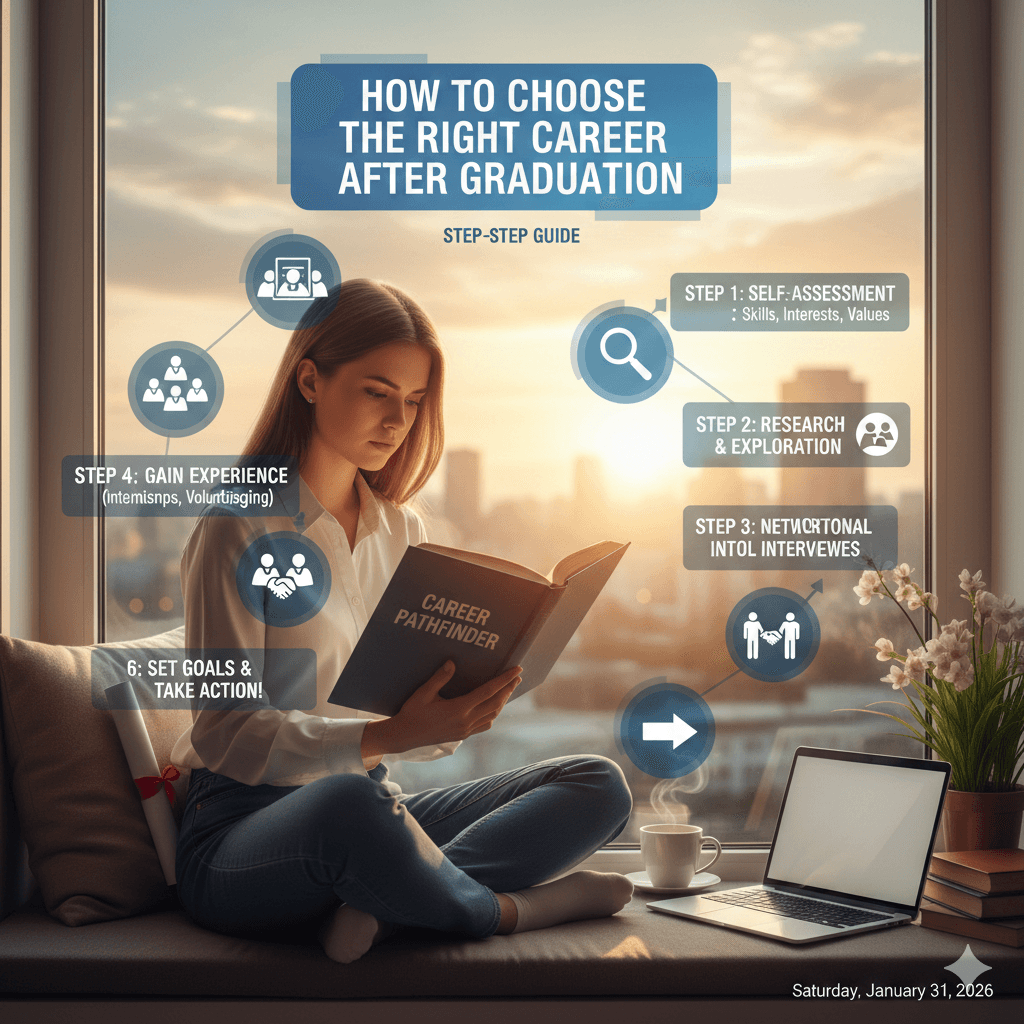
Choosing the right career after graduation is one of the most confusing decisions for students and freshers. With so many options available, many graduates struggle to understand which career path matches their skills, interests, and long-term goals. Completing graduation is a major milestone, but it often brings one of the biggest life questions. What should I do next? Many freshers feel confused, pressured, and afraid of making the wrong choice. This confusion around how to choose the right career after graduation is normal, especially when advice from family, friends, and social media points in different directions. This guide is written to help you make a clear, practical career decision after graduation, based on self-awareness, skills, and long-term growth—not confusion or comparison. This step-by-step guide will help you choose the right career after graduation in a practical and realistic way.
Choosing the right career after graduation is not about finding the “perfect” option. It’s about making an informed decision and moving forward with confidence.
Career Options After Graduation in Commerce Without MBA
Why Choosing the Right Career Matters More Than Salary
Personally, Salary should never be the first filter when choosing a career. Many graduates chase high-paying roles without understanding the work involved. Within a few years, they feel stuck, stressed, or burned out. On the other hand, people who choose careers aligned with their interests and skills often grow faster and earn more over time. Now a days Skill based Jobs pay out has no limit in Domestic and Aboard. Salary grows naturally when you are good at what you do and stay in the field long enough. A good career choice gives you comes with:
- Consistency and learning
- Mental clarity and confidence
- Long-term growth instead of short-term money
Let’s Understand the steps which will help you find your best skills.
Understand Your Interests and Strengths
This step is about honest self-reflection, not online tests or personality quizzes. Your interest does not have to be a “passion.” It just needs to be something you can do consistently without forcing yourself every day. Understanding this makes it easier to select a career path after college that you won’t regret. Just sit and think about yourself and Ask
- What subjects or tasks did I enjoy during graduation?
- Do I prefer working with numbers, people, systems, or ideas?
- Do I like structured work or flexible roles?
| Factor | What to Consider |
|---|---|
| Interest | What you enjoy learning |
| Skills | What you are already good at |
| Growth | Future career scope |
| Stability | Long-term demand |
| Learning Path | Courses or training needed |
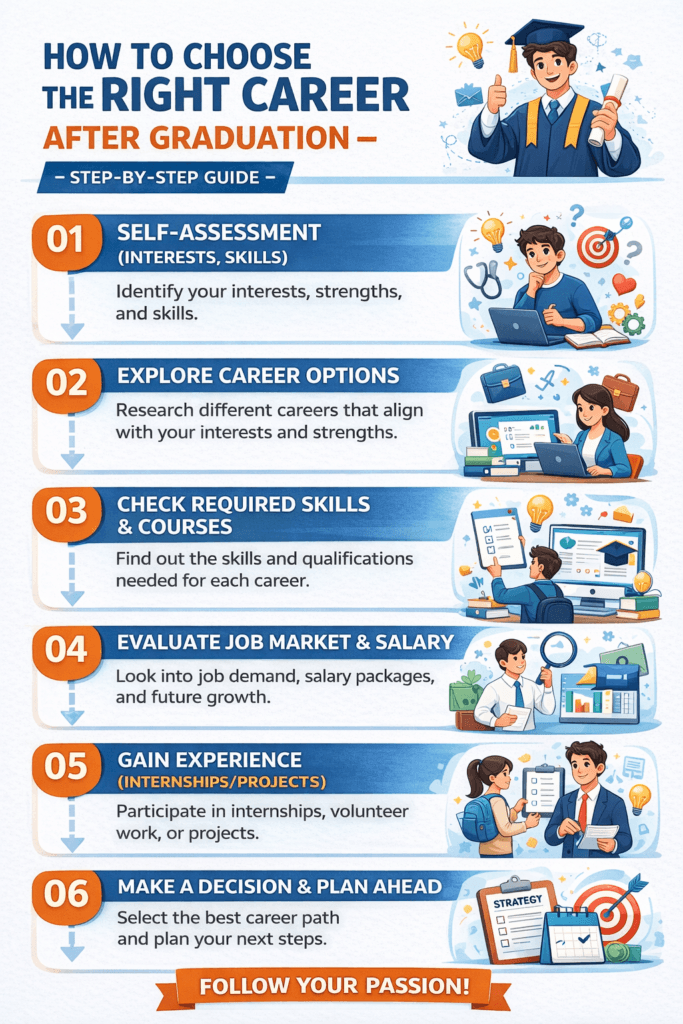
Identify Skills You Already Have
Most graduates underestimate their existing skills. Most of the time you are unaware of skills which you already have because you have not started discovering yourself. This step is critical for choosing career based on skills, not just degrees. Skills can be Hard Skills, Academic Skills or Soft Skills all are equally important for Careers. It can be anything which you are good at So, Think! and Note it Down.
- Communication skills from presentations
- Analytical thinking from assignments
- Time management from exams and deadlines
- Basic technical or software skills
Evaluate Career Growth and Stability
Before committing to any career, look beyond the first job. A stable career is not one that never changes—it’s one that allows you to adapt and grow. Stable Career can be anything which gives you stable income. To understand this ask these Question:
- Is there demand for this role in the next 5–10 years?
- Does the career allow skill upgrades and role changes?
- Are there multiple industries where this skill is useful?

Consider Skill-Based vs Degree-Based Careers
After graduation, careers broadly fall into two categories. Degree Based Careers and Skill based Career, Both are equally good and pay good salary However, it is difficult to realize which will suit you while finalizing career related decisions. For many freshers, skill-based careers offer flexibility, especially when unsure about long-term degrees. This comparison helps with career guidance for freshers who want clarity without pressure.
Degree-Based Careers
- Depend heavily on formal qualifications
- Long preparation timelines
- Examples: CA, government exams, academia
Skill-Based Careers
- Focus on practical, job-ready skills
- Faster entry into the workforce
- Examples: analytics, digital marketing, finance operations
Skill-Based vs Degree-Based Career Comparison
| Factor | Skill-Based Career | Degree-Based Career |
| Time to start | 3–6 months | 2–5 years |
| Cost | Low–Medium | Medium–High |
| Flexibility | High | Limited |
| Career switching | Easier | Difficult |
| Learning style | Practical | Academic |
Avoid Common Career Mistakes After Graduation
Many students make decisions based on fear or comparison. A wrong decision is not permanent, but not deciding at all wastes valuable time and when you realize it. It’s All over again. Avoid these mistake and stay ahead of many:
- Choosing a career only because friends chose it
- Following trends without understanding the work
- Delaying decisions due to fear of failure
- Ignoring skill-building while preparing “later”
How Commerce Graduates Can Apply This Framework
Commerce graduates often face extra confusion due to too many options and this happen with everyone. This approach removes confusion and supports a smarter career decision after graduation. Here’s how to apply this step-by-step guide practically:
- Interests: Finance, accounting, analytics, marketing, operations
- Existing Skills: Numbers, Excel, business understanding, communication
- Growth Check: Look for roles with upgrade paths (analyst → senior → manager)
- Career Direction
- Skill-based roles (accounting, analytics, marketing)
- Professional paths (CA, CS, CMA – if genuinely interested)
- Action Step: Start with one short-term skill or internship.
Simple Career Decision Framework (Quick Checklist)
At Last, Career decision are always tough and this is your first and most important step. Before finalizing any career, you can check this Quick Checklist for yourself. If most of the answers are Yes, You are good to go!!
- I understand what daily work looks like
- I have or can build the required skills
- There is long-term demand
- I am not choosing this only for salary or pressure
Frequently Asked Questions (FAQs)
How to choose the right career after graduation if I’m confused?
Start with self-assessment, shortlist 2–3 options, and test them through courses or internships.
Is salary important when choosing a career?
Salary matters, but growth, skills, and stability matter more in the long run.
How to select a career path after college without guidance?
Use a structured approach based on interests, skills, and market demand instead of random advice.
Is career guidance for freshers really necessary?
Yes. Early guidance helps avoid wasted years and wrong career moves.
Can I change my career after graduation if I choose wrong?
Yes. Many careers today allow switching through skill upgrades.
MUST READ
Infosys Springboard Virtual Internship 2026 A Complete Guide
Japan UTRIP Summer Internship 2026 Your Gateway to World-Class Research in Japan
ASPIRE Scholarship 2026 Aspire Leaders Program 2026 9 weeks fully funded
IGNCA Internship Scheme 2025 Always Open | Eligibility, Stipend ₹10,000 & Apply Details
Latest News & Update
-

10 Top Freelancing Skills That Pay ₹1 Lakh/Month in India (2026)
Are you tired of the traditional 9-to-5 grind and a salary that barely covers the bills? You’re not alone. In 2026, the Indian job market…
-
Best Skills to Learn for Online Earning in India (2026) Start Earning from Home Today
The traditional job market in India is undergoing a massive shift. With inflation rising and the “9-to-5” grind offering less financial security, thousands of students,…
-

Chat Support Jobs Work From Home for Freshers (2026 Guide)
The demand for remote jobs in India is growing rapidly, especially for roles that do not require prior experience. Among these, chat support jobs that…