
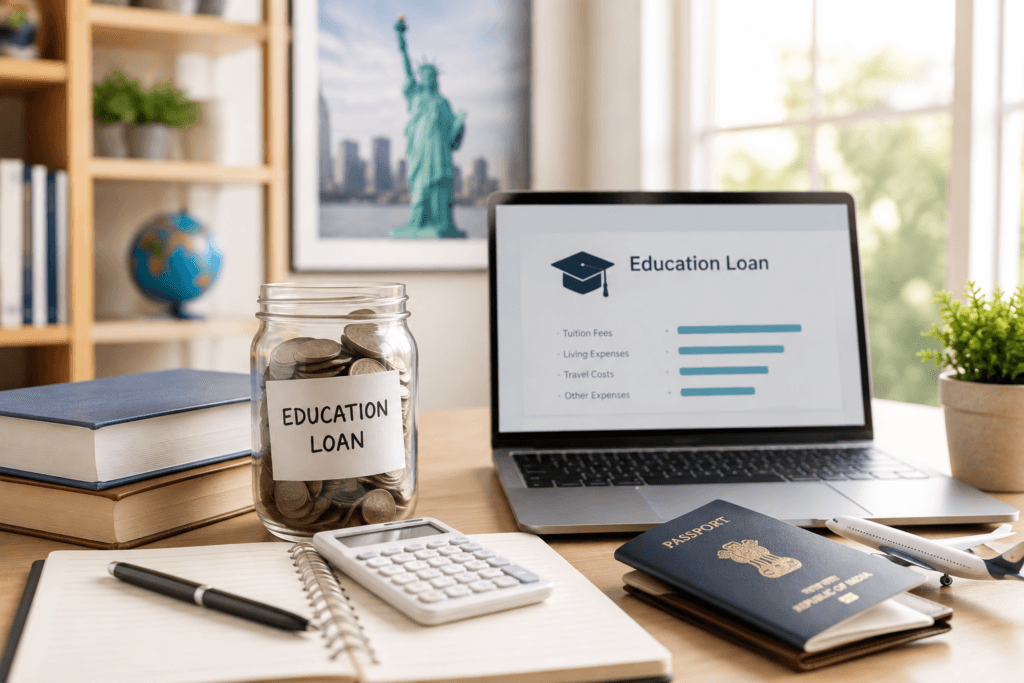
Best education loans usa indian students 2027 is a practical topic for Indian students and graduates planning their next step in 2027. The right choice depends on your budget, eligibility, skills, location and long-term goals. Rather than relying on generic claims, compare current official requirements and build a realistic plan.
Best Education Loans Usa Indian Students 2027 – What You Need to Know
Understanding best education loans USA Indian students 2027 starts with checking eligibility, costs, practical requirements and official information. Use this section as a quick framework before moving to the detailed guidance below.
Why Indian Students Need the Right USA Education Loan
Studying in the United States can involve major expenses, including tuition, housing, insurance, books, travel and daily living costs. For many Indian families, an education loan can bridge the gap between available savings and the full cost of attendance. However, the cheapest-looking loan is not automatically the best option.
Instead, compare the total borrowing cost, eligible expenses, collateral requirement, margin contribution, moratorium, repayment period, processing fees and prepayment rules. Also consider whether the lender accepts your university and course. These details can affect your finances for many years after graduation.
How to Compare the Best Education Loans USA Indian Students 2027
Start by calculating the complete annual cost of attendance. Include tuition, accommodation, health insurance, food, books, laptop or equipment costs, local transport and travel between India and the USA. Then subtract confirmed scholarships, assistantships and personal savings to estimate the amount you actually need to borrow.
Next, compare lenders using the same checklist. A bank may offer a lower interest rate but require property collateral and more documentation. An education-focused lender may process applications faster and offer flexible underwriting, but the overall rate can be higher.
Key Features to Check Before Applying
Loan amount: Confirm whether the lender can fund your complete approved requirement or only part of it.
Interest rate: Ask whether the rate is fixed, floating or linked to a benchmark. Request the current effective rate in writing.
Collateral: Some lenders require property or another security above a threshold, while selected products may offer collateral-free funding for eligible profiles.
Margin: Find out how much of the education cost you must pay from your own funds.
Moratorium: Understand when repayment begins and whether interest continues to accrue during the study period.
Repayment tenure: A longer tenure can reduce the monthly EMI but may increase total interest paid.
Currency exposure: Your loan may be in Indian rupees while your education expenses are in US dollars. Build a buffer for exchange-rate movements.
Processing and other fees: Check processing fees, insurance, legal valuation charges, documentation charges and any other costs.
Public-Sector Banks vs Education-Focused Lenders
Public-sector banks can be attractive when you have acceptable collateral and time to complete documentation. They may offer established education-loan structures and longer repayment periods. However, processing time and documentation requirements can vary by branch and borrower profile.
Specialist education lenders and NBFCs can be useful when the student has a strong admission profile but limited collateral. They may assess the university, course and future earning potential as part of their credit decision. Compare the final sanction terms rather than relying only on an advertised starting rate.
Government Support and Important Cautions
Government-backed education-loan programmes can change over time, so students should verify current eligibility before depending on a subsidy or guarantee. The Ministry of Education has published information on schemes such as PM-Vidyalaxmi and credit-support mechanisms for eligible education loans.
Do not assume that every government education-loan benefit applies to overseas study. Some schemes have specific course, institution, income or loan conditions. Always check the latest official notification and your lender’s written eligibility assessment.
Documents Usually Required
Prepare the admission or offer letter, fee structure, academic records, identity and address documents, passport, test scores where relevant, co-borrower income documents and collateral papers if applicable. Banks may also request bank statements, tax documents and proof of assets.
Keeping a digital folder with clear, consistent documents can reduce delays. If a lender asks for additional evidence, respond quickly and keep copies of every submitted document.
Step-by-Step Application Process
1. Finalise the university and obtain the official fee and admission documents.
2. Build a realistic cost-of-attendance sheet and decide the amount to borrow.
3. Compare at least two or three lenders on total cost and conditions.
4. Check collateral, co-borrower and margin requirements before submitting the application.
5. Submit documents and respond to verification requests.
6. Read the sanction letter carefully before accepting the loan.
7. Confirm disbursement milestones with the university and lender.
8. Keep records of disbursements, interest statements and repayment terms.
How Much Should You Borrow?
Borrow only what you can justify through your education budget. A large sanctioned amount can feel reassuring, but unused borrowing still creates financial obligations when interest applies. Scholarships, tuition discounts, assistantships and personal savings can reduce the loan requirement.
Create a conservative repayment scenario before accepting the loan. Include the possibility of a delayed job, a lower-than-expected starting salary, relocation costs and currency changes. A manageable EMI is more important than maximising the loan amount.
FAQ: USA Education Loans for Indian Students
Can Indian students get education loans for studying in the USA? Yes. Indian banks and specialised education lenders offer overseas education-loan products, subject to lender, university, course and borrower eligibility.
Can an education loan be collateral-free? Some products and eligible profiles may qualify for collateral-free funding, but limits and conditions vary. Confirm the current written terms with the lender.
Should I choose a bank or an NBFC? Compare the complete cost, processing time, collateral requirements and repayment terms. The best option depends on your profile rather than the lender category alone.
Is a 2027 loan product guaranteed to have the same rate as 2026? No. Interest rates and product conditions can change. Verify the current offer before signing.
Loan Comparison Example
Suppose two lenders both approve the amount you need. Lender A may advertise a lower rate but require property collateral, a higher margin and several weeks for verification. Lender B may offer faster processing with less collateral, but its interest rate and processing charges may be higher. The correct choice depends on the complete cost and your family’s risk tolerance.
Build a simple comparison using the same loan amount and tenure for every lender. Record the approximate EMI, total interest, upfront fees, collateral requirements and repayment start date. Then test a second scenario in which employment begins several months later than expected. This exercise gives you a more realistic picture than comparing interest rates alone.
Also ask how the lender handles disbursement. Some universities require payment by specific deadlines, so the timing of each tranche matters. Clarify whether the lender pays the institution directly, how foreign-currency fees are handled and what documents are needed before every release.
Smart Ways to Lower Borrowing Costs
Use confirmed scholarships before finalising the loan amount. If a university provides a tuition waiver or assistantship after the loan application, ask the lender whether the sanctioned amount can be reduced before full disbursement.
Paying interest during the study period, when affordable, can reduce the amount that capitalises or accumulates. However, do not use money needed for essential living expenses just to make early payments. Keep an emergency reserve first.
Finally, understand prepayment rules. If you later receive a strong salary or bonus, the ability to make additional payments without a significant penalty can reduce total interest. Get the policy in writing because lender conditions differ.
Final Due-Diligence Checklist for USA Loans
Before accepting an overseas education loan, review the offer line by line. Confirm the approved amount, interest rate, benchmark or reset mechanism, margin, collateral, co-borrower obligations, moratorium, repayment tenure and all fees. Ask the lender to explain any clause that you cannot understand.
Next, compare the sanction letter with the application you submitted. Check whether the lender approved the full amount or reduced it, whether any expenses were excluded and whether disbursement depends on additional conditions. If the university changes its invoice, contact the lender before the payment deadline.
Finally, create a repayment plan that does not depend on an optimistic outcome. Include a reserve for relocation, job-search costs and unexpected expenses. If your first job takes longer to secure, the reserve can help you avoid expensive short-term borrowing. This is particularly important when your education expenses are in US dollars but your family finances are primarily in Indian rupees.
Keep every loan document securely. You should have the sanction letter, repayment schedule, disbursement records, interest certificates, receipts and correspondence with the lender. These records make future questions easier to resolve and help you track the real cost of the degree.
Frequently Asked Questions
What should I compare before choosing a USA education loan?
Compare the interest rate, processing charges, collateral requirements, margin, moratorium, repayment tenure, disbursement process and prepayment rules. Also compare the total expected repayment rather than looking only at the advertised interest rate.
Can Indian students get education loans without collateral for the USA?
Some lenders offer unsecured education loans subject to eligibility, university, course and co-borrower criteria. However, availability and terms vary, so students should compare current lender requirements before applying.
When should I apply for a USA education loan?
Ideally, begin comparing lenders soon after receiving the university admission or offer letter. Early preparation gives you time to arrange documents, complete verification and meet the university’s payment deadlines.
Can I use an education loan for living expenses in the USA?
Depending on the lender and sanction terms, education loans may cover eligible tuition and certain education-related living expenses. Confirm the exact permitted expenses with the lender before finalising the loan.
Helpful WisdomLand Resource
Continue your research with education loan for Indian students studying abroad.
Authoritative Sources
Verify current requirements using Ministry of Education – PM-Vidyalaxmi information. You can also consult SBI education loans.
Final Takeaway
For Indian students planning a US degree in 2027, the best education loan is the one that fits the university cost, family finances and realistic post-study repayment capacity. Compare lenders early, verify current terms, keep a financial buffer and avoid borrowing more than necessary.