
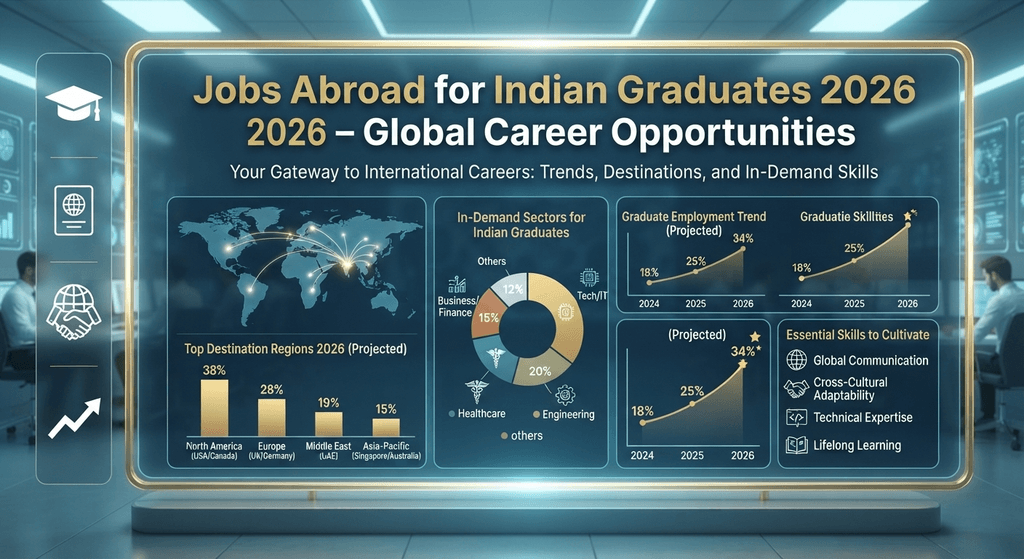
Finding jobs abroad for Indian graduates offers international experience, exposure to different business practices, and access to specialised career markets. For more expert advice, visit www.wisdomland.in. But a foreign job is not simply an Indian job with a plane ticket. Work rights, employer sponsorship, qualification recognition, language requirements and living costs can make a major difference. The safest strategy is to choose the country and job family together, then verify immigration rules from official government sources.
Strategic Planning for Jobs Abroad for Indian Graduates in 2026
As we look towards the current landscape in 2026, finding jobs abroad for Indian graduates requires more than just submitting applications. It demands a strategic approach to aligning your unique skill set with the specific demands of the global market. Whether you are focusing on the burgeoning tech corridors of Germany or the finance hubs in London, persistence and professional preparation are your greatest assets.
You can find valuable resources to guide your search on platforms like LinkedIn, which is instrumental for networking. Additionally, understanding the cost of living differences is vital, and tools like Expatistan offer clear comparisons. Don’t forget to utilize official government portals like the eMigrate portal to ensure every step of your journey is secure and compliant. By prioritizing these steps, your search for jobs abroad for Indian graduates will be both more efficient and more successful.
What Indian Graduates Should Understand Before Applying Abroad
Securing jobs abroad for Indian graduates requires careful navigation of these distinct processes.
A job offer and a work visa are different things
An employer may like your profile but still be unable to employ you unless you have the right to work. Some countries use employer sponsorship; others provide post-study work routes or skilled migration systems. Never assume that an offer automatically gives you immigration permission.
Your occupation matters
Countries often classify occupations and skills differently. Australia, for example, maintains skilled occupation information and links eligible occupations to several visa pathways. The exact occupation code and visa rules matter, so candidates should check the current government list rather than rely on social-media summaries. citeturn0search1
Think about the full financial picture
Compare salary with rent, taxes, health costs, transport, visa fees and relocation expenses. A higher foreign salary is not automatically a better deal if housing is extremely expensive or the role offers no realistic long-term path.
Popular Destinations and What to Check
Understanding these regional differences is crucial for jobs abroad for Indian graduates planning their career moves.
United Kingdom
The UK has routes for skilled workers and also a Graduate visa for eligible people who complete qualifying UK study. Importantly for planning in 2026, the Graduate visa is scheduled to last two years for applications made on or before 31 December 2026, and 18 months for applications made from 1 January 2027; doctoral graduates have a three-year period.
Always check the live GOV.UK page before making decisions. citeturn1search1
Australia
Australia has skilled and employer-sponsored routes. The Skills in Demand visa can allow an approved employer to sponsor a suitably skilled worker, subject to eligibility and other requirements. Australia also has a skilled occupation framework and SkillSelect for certain skilled visas. citeturn0search0turn0search13
Europe
European opportunities vary by country. Graduates should investigate local work permits, Blue Card-style routes where applicable, shortage occupations and employer requirements. Do not treat “Europe” as one immigration system.
Other destinations
Canada, the United States, Singapore, the UAE, Ireland, Germany and other markets can be attractive depending on the occupation. Immigration rules can change quickly, so official government sources should be the final authority.
| Destination Region | Key Employment Pathway | Primary Consideration |
|---|---|---|
| United Kingdom | Graduate visa, Skilled Worker route | Check validity lengths for the Graduate visa based on application year and live GOV.UK guidelines. |
| Australia | Skills in Demand visa, SkillSelect framework | Requires employer sponsorship or skilled points qualification; verify occupation lists. |
| Europe | EU Blue Card, local national work permits | Immigration frameworks vary by country; local language skills and shortage lists are key. |
| North America | Employer-sponsored work visas, post-graduation work permits | High demand in specific tech/engineering roles, but visa lotteries or quota caps may apply. |
Best Job Families for International Applicants
Technology and data
Finding sustainable jobs abroad for Indian graduates starts with identifying these high-demand industries.
Software engineering, cloud, cybersecurity, data, AI and specialised technology roles can be internationally portable when the candidate has demonstrable skills.
Finance and accounting
Finance, audit, risk, accounting, FP&A and compliance can be strong options, but local regulations and professional qualifications matter. A CA, ACCA, CFA or relevant local qualification may improve credibility depending on the role.
Engineering and technical occupations
Engineering careers can have strong international demand, but professional registration and recognition requirements vary. Check whether your degree and experience are accepted in the destination country.
Healthcare and regulated professions
Healthcare is a special case because licensing, language and credential assessment can be mandatory. A job search should begin with the regulator, not a recruiter.
How to Find Legitimate Jobs Abroad
A proactive and verify-first approach is essential when seeking jobs abroad for Indian graduates.
Start with official employer career pages
Use LinkedIn and other job boards for discovery, but verify the role on the employer’s own website. A vacancy that disappears from a job board may still be legitimate, while a copied advertisement may be fraudulent.
Build an international CV
Keep the CV achievement-focused and easy to scan. Mention tools, scale and results. Use the local spelling and conventions where appropriate, but do not change facts simply to match a foreign format.
Use referrals intelligently
A referral should connect you to a genuine hiring process, not bypass it. Ask people for advice, role context and a referral when appropriate. Do not pay for guaranteed employment.
Visa Planning for 2026
Australia as an example
Australia’s Skills in Demand visa requires employer nomination and relevant skills, and the official page states that the visa can last up to four years in the Core Skills stream. Australia also publishes occupation and SkillSelect information. citeturn0search0turn0search13
UK as an example
The UK Graduate visa is specifically tied to eligible UK study, while the Skilled Worker route is a separate work route. This is why graduates should distinguish post-study work rights from overseas sponsorship. citeturn1search1turn1search4
Do not plan around rumours
Visa groups on social media can be useful for experiences, but they are not a substitute for official policy. Check government pages immediately before paying an application fee, accepting an offer or booking a move.
A 30-Day Job-Abroad Action Plan
Week one: choose the target
Select one country, one job family and one seniority level. Study 20 relevant vacancies and record repeated skills, qualifications and visa requirements.
Week two: rebuild your CV and portfolio
Create a concise CV, update LinkedIn, improve two relevant projects and prepare a short professional introduction. Ask a knowledgeable person to review clarity and evidence.
Week three: apply and network
Apply to a focused list of suitable roles and contact professionals for informational conversations. Keep a spreadsheet of every application.
Week four: interview preparation
Practise role-specific technical questions, behavioural stories, salary discussions and questions about relocation or sponsorship. Research each employer before interviews.
Country-by-Country Decision Framework
Step 1: compare the job market
Choose a job family first and then compare countries. Search at least 20 vacancies per country and record salary language requirements, sponsorship wording and common qualifications. This gives you a realistic picture before you spend money on applications or relocation.
Step 2: compare immigration pathways
Check whether the country expects employer sponsorship, a points-based invitation, a post-study route or another form of work authorisation. Australia, for example, has employer-sponsored and points-tested pathways with separate rules. citeturn0search0turn0search13
Step 3: compare living costs
Estimate monthly rent, transport, food, taxes and insurance. Then compare the likely take-home pay rather than the headline annual salary. This is especially important for expensive cities.
Documents to Prepare Before an Overseas Job Search
Professional documents
Organizing these documents correctly is a fundamental step for all aspirants pursuing jobs abroad for Indian graduates.
Keep an updated CV, degree documents, transcripts, employment letters, project portfolio and professional references where relevant.
Make sure dates and job titles are consistent across documents.
Immigration documents
Depending on the country and route, you may need a passport, proof of qualifications, skills assessments, English-language evidence, police certificates or other documents. Requirements vary, so prepare only what the official route requires.
A relocation budget
Create a separate budget for application fees, document certification, language tests, travel, accommodation deposits and emergency expenses. A job search abroad can take months, so plan for the period before the first salary.
Frequently Asked Questions
What is the current outlook for jobs abroad for Indian graduates in 2026?
Yes, but eligibility depends on the country, occupation, employer and work-authorisation route. A graduate should treat the job search and visa plan as one combined process.
Which country is easiest for Indians to get a job?
There is no single easiest country. Ease depends on occupation, experience, qualification, salary, language and current immigration policy.
Can I apply for overseas jobs from India?
Yes. Many employers accept international applications, although some vacancies require existing work rights or local presence. Always read the eligibility section carefully.
Is Australia good for Indian graduates?
Australia can be attractive for skilled professionals and graduates, but visa eligibility is occupation- and pathway-dependent. Official government information should be checked before planning a move. citeturn0search1turn0search13
How do I avoid overseas job scams?
Verify the employer, vacancy and immigration route independently. Do not pay for a guaranteed job or hand over sensitive financial information to an unknown recruiter.
Recommended schema types: Article + FAQPage. The FAQ questions and answers above are written as visible page content so they can be marked up in your CMS.
Useful official and trusted resources
· UK Government – Graduate visa
· UK Government – Graduate Trainee visa
· Australian Government – Skills in Demand visa