Government Scholarships For Indian Students Studying Abroad
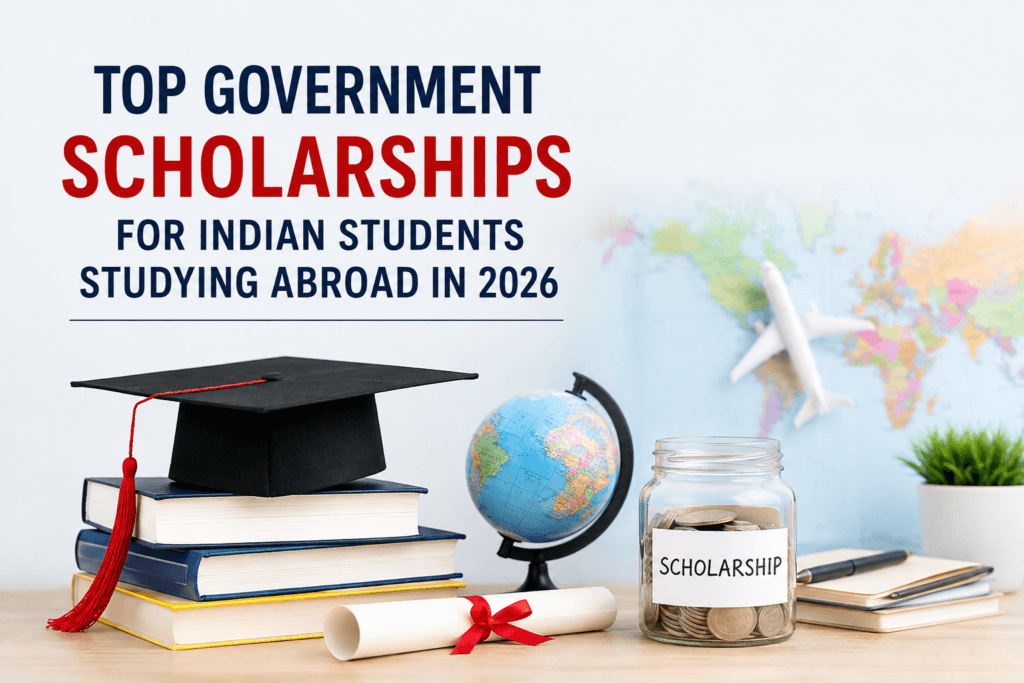
Government scholarships for Indian students studying abroad can make an overseas degree far more affordable by reducing tuition, living and travel costs. In 2026, students should look beyond university discounts and check national scholarship programmes funded by India and other governments.
The strongest applications usually combine a clear academic goal, evidence of leadership or impact, a realistic study plan and carefully prepared documents. This guide explains the major options, who they suit and how to approach the process without relying on last-minute applications.
What Are Government Scholarships for Indian Students Studying Abroad?
These scholarships are funded or administered by governments, public agencies or government-backed international programmes. Depending on the scheme, support may cover tuition fees, living expenses, travel, health insurance, visa costs or a combination of these. Some programmes are designed for specific nationalities, academic levels or fields, while others are open internationally.
A key point is that “fully funded” does not always mean every personal expense is paid. Always read the official award terms before planning your finances.
Major Government-Funded Options to Research
The National Overseas Scholarship is one of the most important Indian government routes for eligible students from specified communities. The Ministry of Social Justice and Empowerment currently lists 125 annual slots under its 2026-27 scheme for SC and other specified categories.
The Ministry of Tribal Affairs separately operates the National Overseas Scholarship for eligible ST and PVTG students, with 20 awards a year and support that can include tuition, maintenance, travel, visa and insurance costs. Official eligibility rules and application windows should be checked each year because they can change.
Additional Guidance
International government-funded choices are also valuable. The UK’s Chevening programme is a well-known route for one-year master’s study, while Commonwealth scholarships support eligible students through UK-linked programmes.
Germany’s DAAD scholarship database lists funding opportunities for international students, and Erasmus Mundus Joint Masters are funded by the European Union, with full scholarships available for selected candidates. Fulbright programmes are another important option for Indian applicants interested in the United States.
Each has a different selection philosophy, so do not use one generic application strategy for every scholarship.
Who Should Apply?
Start by checking eligibility before investing time in essays. Review citizenship or residency rules, academic qualifications, age limits where applicable, work experience requirements, income criteria, course level, eligible countries and university conditions. For example, the 2026-27 ST National Overseas Scholarship portal states specific age and university-ranking conditions for master’s and PhD applicants.
The SC and related-category NOS scheme also has defined community and income eligibility rules. A strong academic profile is useful, but eligibility is the first filter.
How to Build a Strong Scholarship Application
Begin with a shortlist of three to eight scholarships that genuinely match your profile. Create a tracker with the opening date, deadline, eligibility, required references, statement prompts, test scores and document requirements. Then write a single career story that connects your past preparation with the proposed course and your future impact.
Scholarship committees want to understand why this particular programme matters and what you plan to do with the opportunity.
Additional Guidance
Your statement should be specific rather than dramatic. Explain the problem or opportunity you care about, what you have already done, why the chosen course is relevant and how the degree will strengthen your contribution after graduation. Use measurable examples where possible.
Recommendations should come from people who can describe your academic ability, professional performance or leadership with evidence rather than generic praise.
Documents to Prepare Early
Keep digital copies of your passport, academic transcripts, degree certificates, CV, test scores, recommendation letters and proof of work or extracurricular activity. Some scholarships may require admission offers, income certificates, category certificates or university-specific documents.
If a programme integrates with a document service such as DigiLocker, make sure the records are accurate and accessible before the application period becomes busy.
Application Timeline for 2026-27
A practical timeline is to research programmes several months before the expected deadline, prepare tests and references early, draft essays well in advance, and submit at least a few days before the portal closes. Many international scholarships publish their calls months before the academic year begins.
Erasmus Mundus, for example, says applications for many programmes are commonly submitted between October and January for the following academic year. Always follow the individual programme website rather than relying on a third-party deadline list.
Common Mistakes to Avoid
The most common mistakes are applying without checking eligibility, using the same personal statement everywhere, ignoring reference requirements, leaving financial documents until the final week and assuming a scholarship automatically covers every expense. Another mistake is choosing a university first and trying to force a scholarship into the plan.
Reverse the process when appropriate: identify funding routes, understand their eligible courses and then build a university shortlist around them.
Final Checklist
Government scholarships for Indian students studying abroad can be highly competitive, but a structured process improves your chances. Verify official eligibility, create a deadline tracker, prepare documents early, develop a focused career narrative and submit polished applications.
For ongoing study-abroad guidance, explore the resources on WisdomLand and use official government or scholarship portals for final eligibility and deadline confirmation.
Related WisdomLand Resource
For more international education, scholarship and student-career resources, visit WisdomLand.
Official Sources to Verify Current Rules
Government of India – National Overseas Scholarship (SC and related categories)
Ministry of Tribal Affairs – National Overseas Scholarship